
On June 30, mining and metals giant Vedanta, announced that it had decided to initiate a strategic review of its steel and steel-making raw material businesses. The review would begin immediately and evaluate a broad range of options, including but not limited to a potential strategic sale of some or all of the steel businesses, the company said in its stock exchange filing. The signs have been there - approaches had been made to steel players over the past year. Last December, Anil Agarwal, chairman Vedanta group, told Business Standard that the steel plant capacity was about 3 million tonnes (mt).
Loans of over Rs 1.8 trillion, for which agreement has been signed by banks, are likely to be referred to IBC.
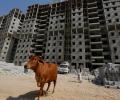
Property buyers fund the project cost and the entire debt and entire equity servicing, and yet, have no locus standi in the IBC process, points out Debashis Basu.

Piramal Group on Thursday said the Reserve Bank is understood to have cleared the resolution plan for debt-ridden DHFL as approved by the Committee of Creditors (CoC). The CoC had approved a resolution plan submitted by a Piramal Group company, Piramal Capital and Housing Finance Limited, last month. "We understand that the RBI has approved the DHFL resolution plan from Piramal Capital and Housing Finance, submitted by the CoC," Piramal Group said in a statement. The resolution plan was approved by the CoC in its 18th meeting concluded on January 15, 2021.

Piramal Enterprises' bid for debt-ridden DHFL received the most votes from lenders at the close of the voting process on Friday, sources said. Piramal Enterprises' bid received 94 per cent votes as compared to 45 per cent for the US-based Oaktree Capital. Voting was done on various parameters, including qualitative and quantitative.

The target was for banks to sell Rs 2 trillion worth of non-performing assets to NARCL, the so-called 'bad bank, by 2021-2022. Only 10 per cent of this has been executed.

Bankers said they are looking outside the bankruptcy courts and will be able to resolve a few debts in the power sector before January-end.

Experts say this further underlines the lack of investor interest in stressed assets at present.

Corporate Affairs Secretary Injeti Srinivas said the issue is how the interests of stakeholders are to be balanced

Mallya remains on bail pending his UK High Court appeal, now scheduled for February 2020.

The settlement offer has been made for 13 out of the 15 Videocon group companies that are currently under Corporate Insolvency Resolution Process.

A bankruptcy appeals court has scrapped billionaire Anil Agarwal-led Twin Star Technologies' winning bid to take over Videocon Industries Ltd on a plea by some creditors that the money offered imposed a steep Rs 62,000 crore haircut upon banks. The National Company Law Appellate Tribunal (NCLAT) asked creditors to initiate the fresh sale of Videocon, a consumer durables company manufacturing products ranging from air-conditioners to washing machines, for recovery of their unpaid Rs 64,637.6 crore. While a majority of lenders had previously accepted Twin Star Technologies' Rs 2,962.02 crore offer, Bank of Maharashtra (BoM) and IFCI Ltd dissented, saying the amount offered was close to the liquidation value of the bankrupt firm and that they cannot be paid less than the liquidation value.

First, the Insolvency and Bankruptcy Code, much-lauded as a game changer, needs serious reform. Second, some vital policy choices would need to be made as far as competition law is concerned., says Somasekhar Sundaresan.

'I suspect the recovery that the banks are going to get out of this IBC is not going to be more than 30 per cent.' 'If you leave the steel industry aside, the recovery rates are not looking very, very healthy,' Jairam Ramesh tells the Rajya Sabha.

Setting aside the NCLAT order, a 3-judge bench headed by Justice R F Nariman, said the two set of creditors will be treated differently during the insolvency proceedings and taking over of a debt-ridden firm by another company.

A total of 4,452 cases have been disposed at pre-admission stage and 66 have been resolved after adjudication. 260 cases have been ordered for liquidation.

Around 241 companies were sent for liquidation under the IBC by various NCLT benches and in only 58 cases have the resolution plans been accepted

Bankers said the SC verdict might prolong the resolution process and force lenders to bring back cases to the drawing board.

The Essar group hinted at challenging the verdict, citing last week's Supreme Court order that upheld the August 2018 amendment to the IBC law.

Reliance Industries (RIL) is likely to be the lone bidder for Mangalore-based JBF Petrochemicals, which is up for sale after defaulting on bank loans worth Rs 5,000 crore. The lenders for the second time extended the deadline for submission of bids, which had ended on August 20, as several players, including public sector companies, were redrawing their acquisition plans, said people in the know. "There were several companies which had submitted their expressions of interest (EoIs) for the company but after due diligence decided to exit the race," said a source close to the development. "The new deadline for submitting financial offers is August-end," the source said.

The National Company Law Appellate Tribunal (NCLAT) on Tuesday stayed the order of NCLT Mumbai directing the lenders of DHFL to consider the offer by the debt-ridden mortgage firm's erstwhile promoter Kapil Wadhawan. A vacation bench of NCLAT comprising Acting Chairman Justice A I S Cheema and Member Technical V P Singh stayed the order passed by the Mumbai bench of the National Company Law Tribunal (NCLT). On May 19, NCLT Mumbai had directed the settlement plan offered by Wadhawan to be considered by the lenders of DHFL, one of the lawyers engaged in the matter said.

Synergy Group, the sole potential bidder for Jet Airways, had sought more time to take a decision on investing in the grounded airline.
Experts consider Sebi's takeover code in its present form to be on a par with any foreign code governing public mergers and acquisitions.

The National Company Law Appellate Tribunal (NCLAT) on Monday dismissed the petition filed by an employee association of debt-ridden Jet Airways, challenging the sale of two floors of office space in Mumbai's business district of Bandra Kurla during the insolvency process of the grounded carrier. Jet Aircraft Maintenance Engineers Welfare Association (JAMEWA had challenged the orders passed by the Mumbai bench of the National Company Law Tribunal (NCLT) on June 11, 2021, allowing the sale of the office space for Rs 490 crore. The association had contended that the sale of BKC property, was not permissible under the Insolvency & Bankruptcy Code (IBC) as a moratorium was declared over the assets of the company after an order dated June 20, 2019.

The NCLAT's order is offensive because it goes against every tenet of bankruptcy reorganisation. If Justice Sudhansu Mukhopadhyay's tenets are accepted by the Supreme Court, we will not only regress in modern bankruptcy reorganisation but also slide back in the Doing Business rankings, says Omkar Goswami.

When Jet Airways shut operations, the slots which were allocated to it were temporarily distributed among various airlines. And, the airlines that were called upon to immediately create infrastructure so that the public at large does not face any hardship have invested huge amounts of money to created infrastructure to utilise such slots. "In view of this, though the allocation of slots to such airlines is temporary the same can't be withdrawn from them without any legitimate basis.", the affidavit said.
Lenders say settlements will cross over 100 accounts in the March quarter.

Piramal Enterprises on Friday claimed that its bid for resolution of debt-ridden mortgage lender DHFL is highest and fully compliant with regulatory norms. Since the conclusion of the fifth and final round of the bidding process last month, Piramal Enterprises and the US-based Oaktree Capital are claiming that their bids are the highest and fully implementable. According to sources, suitors have submitted bids in the range of Rs 35,000-37,000 crore.
The total admitted claim of financial creditors of these 88 companies stood at Rs 1.3 trillion, of which they recovered Rs 65,635 crore.

He supervised and handled several major big ticket insolvency cases that includes Essar Steel, Bhushan Power & Steel, Bhushan Steel, Jaypee Infratech, ElectroSteel Steel, Binani Cement, Reliance Communications.
Jalan Kalrock Consortium, the winning bidder for the grounded Jet Airways, will make a total cash infusion of Rs 1,375 crore in the airline and lenders will take a steep haircut on their admitted claims of over Rs 7,800 crore under the approved resolution plan. The National Company Law Tribunal (NCLT) on June 22, approved the consortium's resolution plan for Jet Airways, which has been undergoing insolvency resolution process since June 2019. The carrier shuttered operations in April 2019.

India Ratings expects long products demand growth to be sharp, supported by a demand push from the government-led infrastructure investments in affordable housing, railways, rural electrification and road networks.

The recent amendments to the IBC practically barred promoters from re-acquiring their own assets, leaving only a small window to convert their non- performing assets into standard assets by paying the overdues.

The Delhi high court on Thursday put on hold the insolvency resolution process (IRP) proceedings against Reliance Communications (RCom) chairman Anil Ambani in relation to the recovery of Rs 1,200 crore loans given by SBI to his two firms. Ambani had given personal guarantees for the Rs 565 crore and Rs 635 crore SBI loans to RCom and Reliance Infratel Ltd (RITL), respectively, in August 2016.
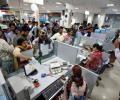
Lenders send 'SOS' to the finance ministry on the tardy decision making and pile-up of cases at the Debt Recovery Tribunals and its appellate forum the Debt Recovery Appellate Tribunal.
Before the pandemic hit the world and led to shutdowns, the company had received nearly half a dozen offers. But bidders are now withdrawing. They want to reassess the situation. They want to conserve cash and avoid acquisition.

Tinesh Bhasin explores the limitations of rights granted to homebuyers under the Insolvency and Bankruptcy Code.

The Indian lenders are worried over the fast depleting asset base of the Future group companies which would make their recovery of dues difficult. The asset base of Future group has eroded in the last two years due to lockdown and takeover of 947 stores by rival Reliance Retail after Future group's lease on the properties expired. Bankers said they have approached bankruptcy court so as to avoid any duplication of legal action and reduce time at the legal forums.

The Delhi high court on Monday sought the Centre and SBI's reply to former RCom chairman Anil Ambani's plea to include the Chinese banks, which have got a decree of $717 million against him from a court in United Kingdom, in the proceedings related to recovery of Rs 1200 crore loan granted to two of his companies. The high court also said that the moratorium on recoveries from sale of Ambani's assets, as provided under section 96 of the Insolvency and Bankruptcy Code (IBC), would remain in operation for now. This direction came on the application moved by the State Bank of India (SBI) seeking a declaration that the moratorium shall continue to be in effect.

Under the plan, the government has categorised IL&FS group companies into green, amber and red based on their respective financial positions.
